Balancing the scales: How trade imbalances, export trends and policy shifts shape South Africa’s economic future with China—and lessons for Africa.
Since 2000, South Africa’s total bilateral trade with China has grown significantly, rising from US$1.34 billion to US$34.18 billion in 2023 (Chart 1). However, this growth has been accompanied by a persistent trade imbalance favouring China. South Africa primarily exports raw materials, including mineral products, metals and, to a lesser extent, agricultural goods such as edible fruits, nuts and wine (Chart 2), while importing manufactured items like machinery, electronics, apparel and vehicles (Chart 3).
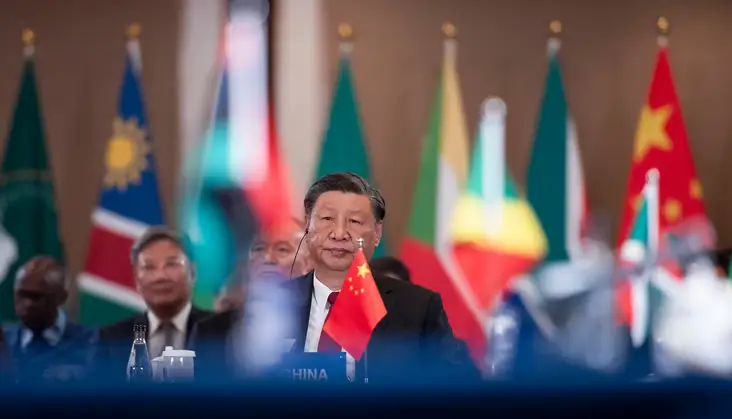
This surge in trade was driven by complementary economic needs, strategic partnerships and proactive policy measures under the Forum on China-Africa Cooperation (FOCAC), launched in 2000, as well as the formation of the BRICS bloc in 2009. FOCAC, a platform for dialogue and collaboration between China and African countries, positions South Africa as a key player in fostering this relationship. By 2008, China had overtaken the United States (US) as South Africa’s largest trading partner, with South Africa becoming China’s biggest market in Africa. The establishment of BRICS further strengthened economic ties between the two nations, offering a structured framework for high-level discussions and agreements to enhance trade.
Future trading relationships between China and South Africa look promising, as the former is poised to deepen its economic integration with the latter, capitalising on the prevailing tensions between South Africa and the US due to President Trump’s negative stance towards South Africa’s genocide case against Israel, BRICS, now BRICS+, and the contentious South African land expropriation bill.